 chainscore.net
Desk
For an asset manager
An allocator wants holdings, a valuation policy, proof the fund controls the wallet, and a mandate check. This origin screens wallets and can inventory identified positions. It is not a holdings statement, not ASC 820, and not an IPS breach log.
What the screen is for
After you sign in, Screen is the path that files it. Screen the addresses the fund actually uses. Use Holistix when you need an inventory of identified, priced positions. If the house needs one artefact, bind the report to the procedure and download the sealed PDF. Read the coverage gate before the headline band.
Use it as AML appetite on those addresses. Holistix tolerance is institution-owned boundaries: sanctions forces the top level, and a max level cannot auto-accept. That grades AML risk. It is not an eligible-asset list, a venue whitelist, or a concentration cap.
ChainTrace “liquidity” is the illicit share of the flow through each pool. It is not depth, days-to-liquidate, or a 22e-4 bucket. An allocator who reads that heading as tradability reads it the wrong way round.
Inventory without a fake book score
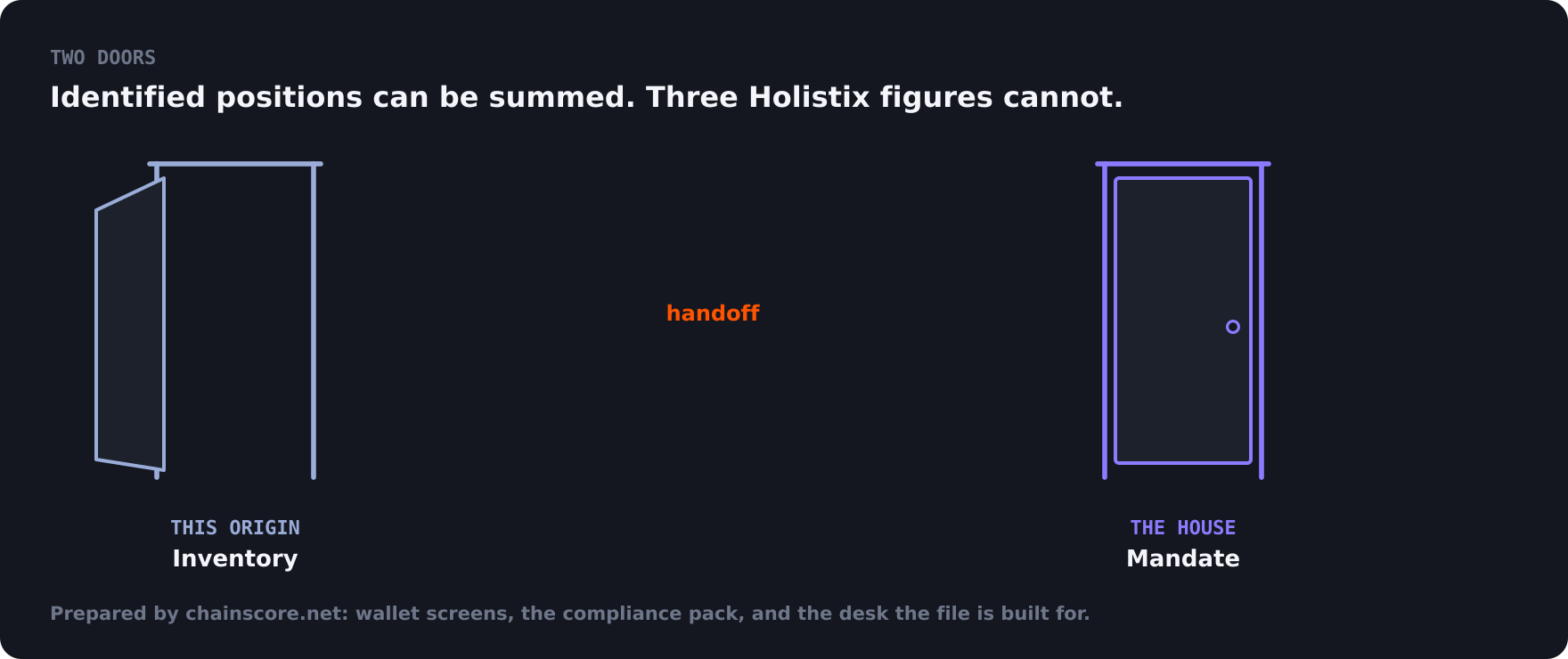
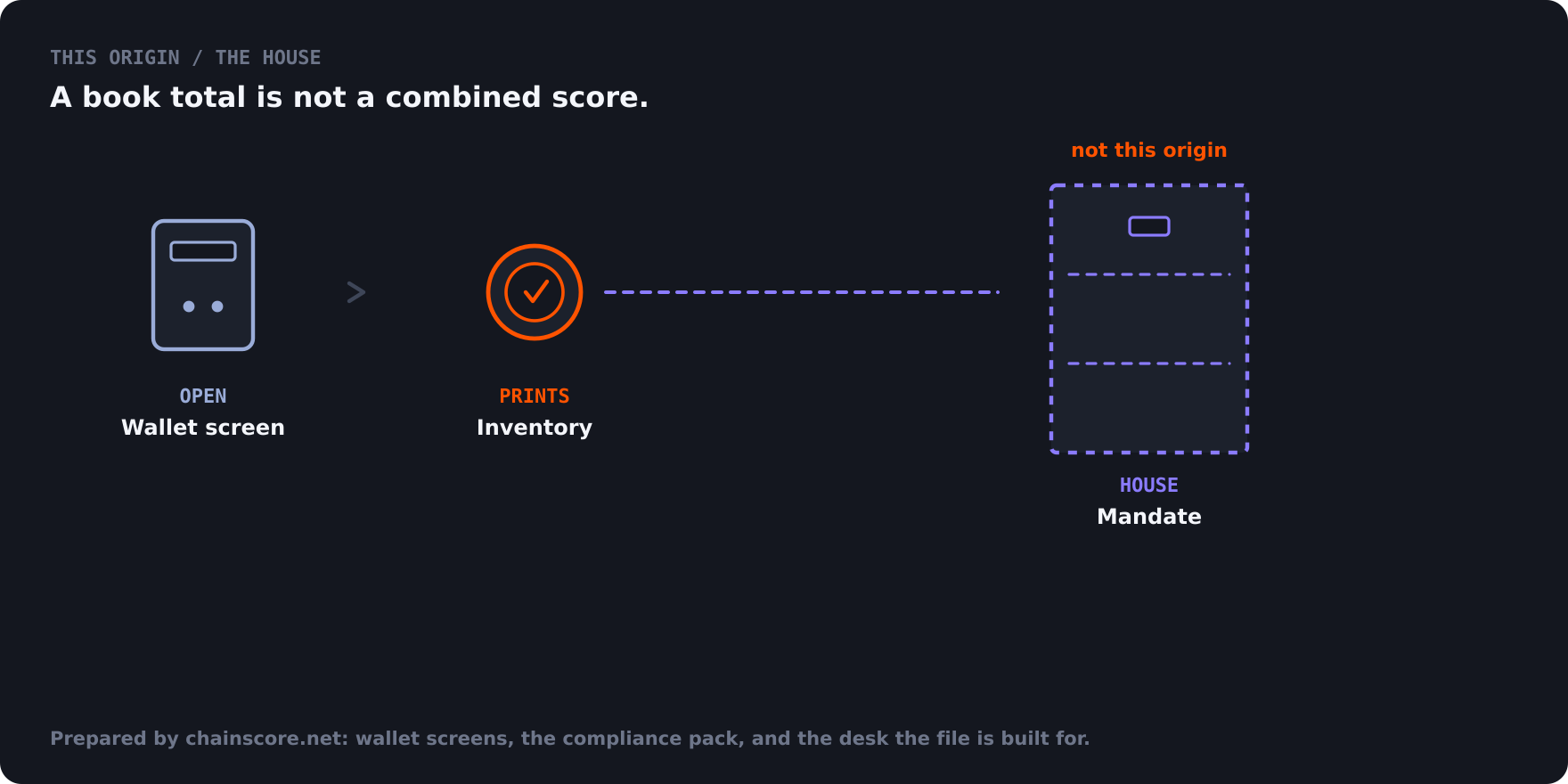
Identified, priced positions can be summed across a book. Unread and unpriced chains are named. Three Holistix figures cannot be averaged. The three engine scales — ScoreGuard runs 1–100, lower is riskier. ChainTrace runs 0–100, higher is riskier. Holistix runs 0.0–10.0, higher is riskier. — cannot be summed either.
A wallet holding many tokens still prints native balance as the position on some engines; tokens appear as transfer flow. An unpriceable token is left at zero rather than guessed — right for AML, wrong if you read the USD total as the whole book. Unpriced value is unmeasured, not small.
generated_at is now. Re-running next quarter will not reproduce this month: prices, labels and the sanctions snapshot all move. Pin the copy you relied on.
What the house still holds
The address is typed in. “Verified” means the label book names it, not that the fund holds the key. Qualifying custodian, segregation, and a surprise-exam holdings list are not this artefact.
The procedure PDF is a borrower file — facility, tenor, collateral, requested LTV. An asset manager who needs a subscriber pack and a re-screen at redemption will not find a fund or a capital account on that file. Cost basis and realised P&L are fund accounting.
Monitoring that fires on material change, with a webhook, is the alerting spine — keyed per address. Vendor due diligence on chainscore.net itself is on the assurance page: no ISO 27001 and no SOC 2 are stated. That is the honest answer, and it is still not the ODD report.