 chainscore.net
Desk
For a credit desk
A credit officer gets one file they can open. chainscore.net assembles that file and binds the screens: face-sheet, wallet, annex hashes, legal acceptances and the coverage gate on a single artefact.
One file you can open
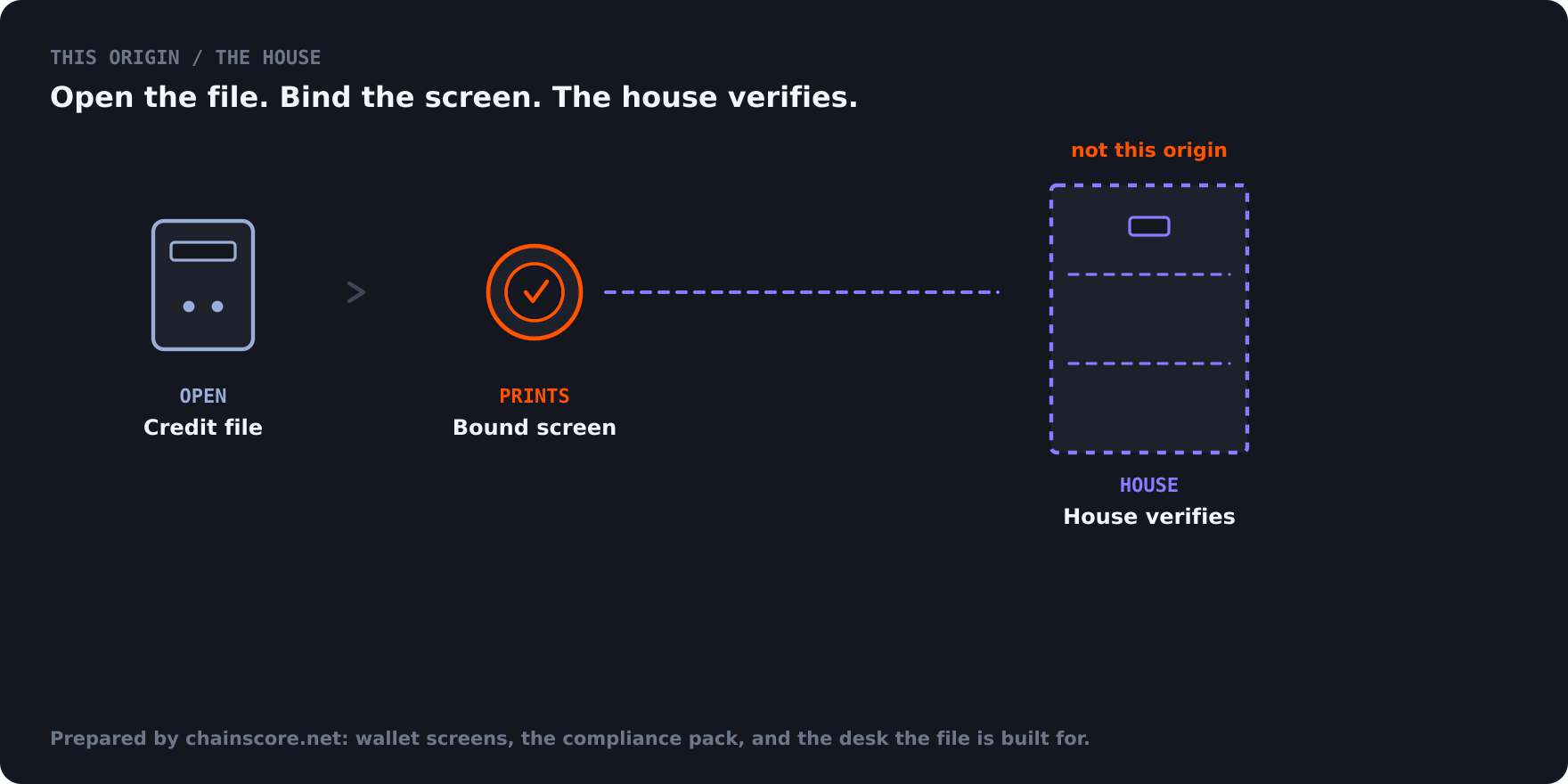
You are building a case for a facility against a wallet: who the applicant is, which address would be charged, what they asked for, and what the bound screens actually showed. The procedure PDF is that case. Face-sheet, wallet, annex hashes, legal acceptances and open items sit on one artefact.
Stated identity — name, date of birth, nationality, residency, ID, entity, LEI, directors — prints as stated, ready for the house file. A name compare against OFAC, EU, UK and UN lists runs on the typed customer legal name, so the desk can quote the lists that loaded.
How the screen earns its keep
After you sign in, Screen is the path that files it. Run ScoreGuard Know Your Address on the wallet to be charged. If the question is a transfer, run Know Your Transaction as well. If the house needs one artefact, bind the report to the procedure and download the sealed PDF. Read the coverage gate before the headline band.
Holistix inventories several wallets as identified, priced positions, so a book of addresses is visible without mixing three 0–10 scores into one figure.
ScoreGuard runs 1–100, lower is riskier. ChainTrace runs 0–100, higher is riskier. Holistix runs 0.0–10.0, higher is riskier. Read the coverage gate before the headline. Thin attribution stays in review. A high band with a small attributed share means little was identified — useful, because the desk can see how much of the wallet the screen actually reached.
The Assessment paragraph follows the gate. If the gate issued review, the last line of the Assessment says so. Quote that sentence with the band, and the file already carries the control the credit committee will ask for.
What the pack gives the desk
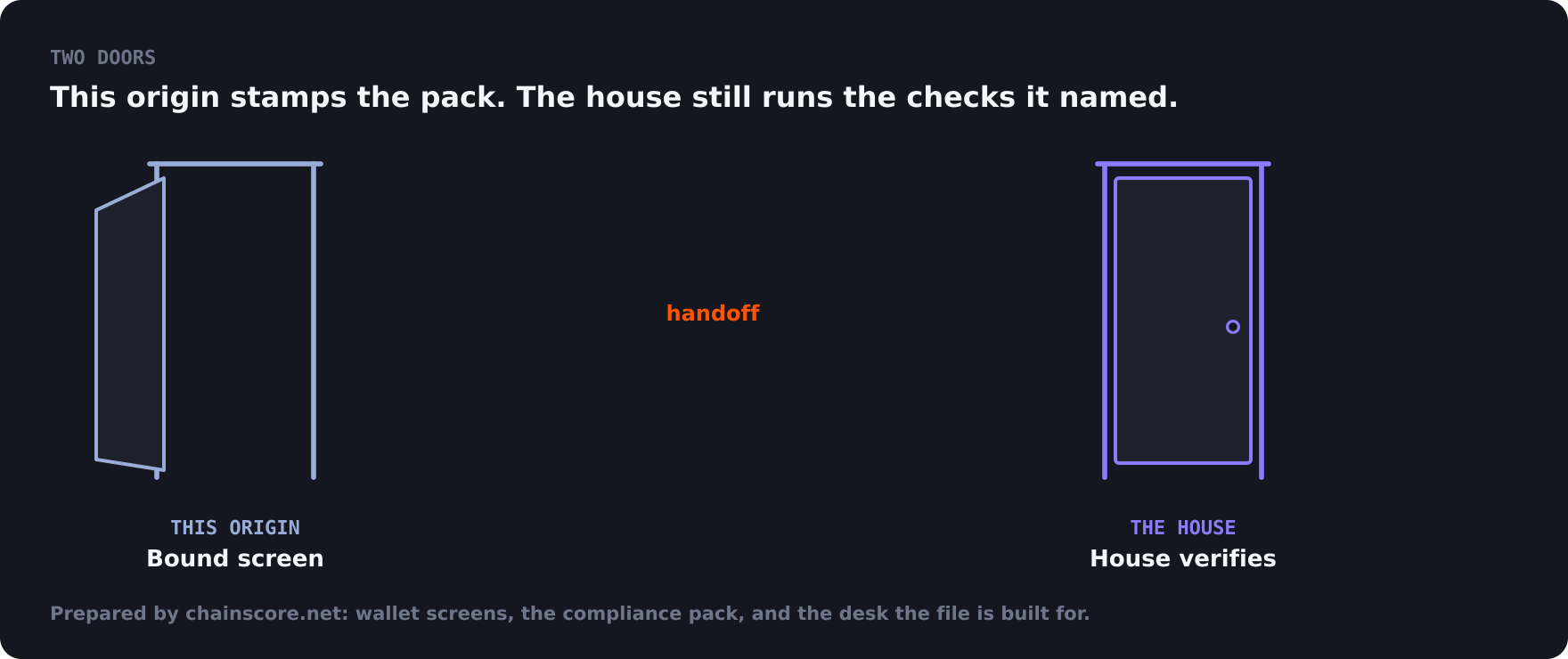
PEP, liveness and adverse media stay named on the procedure as a house handoff, so the officer can see who runs those checks. A PEP attestation on the screen is disclosure the applicant typed — it travels with the pack.
UBO is a table the preparer typed — natural persons, percent, control path — ready for the house to verify. Four-eyes is a checker name on the face-sheet, so the file shows who signed.
Download the sealed PDF. SHA-256 and the uniqueness code let you cite the copy you relied on, pin it to the facility, and compare a later rerun as a new measurement.