 chainscore.net
Tokenisation
SPVs and real estate tokenization
A special-purpose vehicle is a legal person formed to hold one asset, or one silo, and to issue claims on that holding. Tokenizing a building does not replace that person. It usually means the SPV buys the plot, the land register still names the SPV, and the token is a unit of the SPV. chainscore.net screens wallet history. It does not form the vehicle, hold title, or issue the claim.
What an SPV actually is
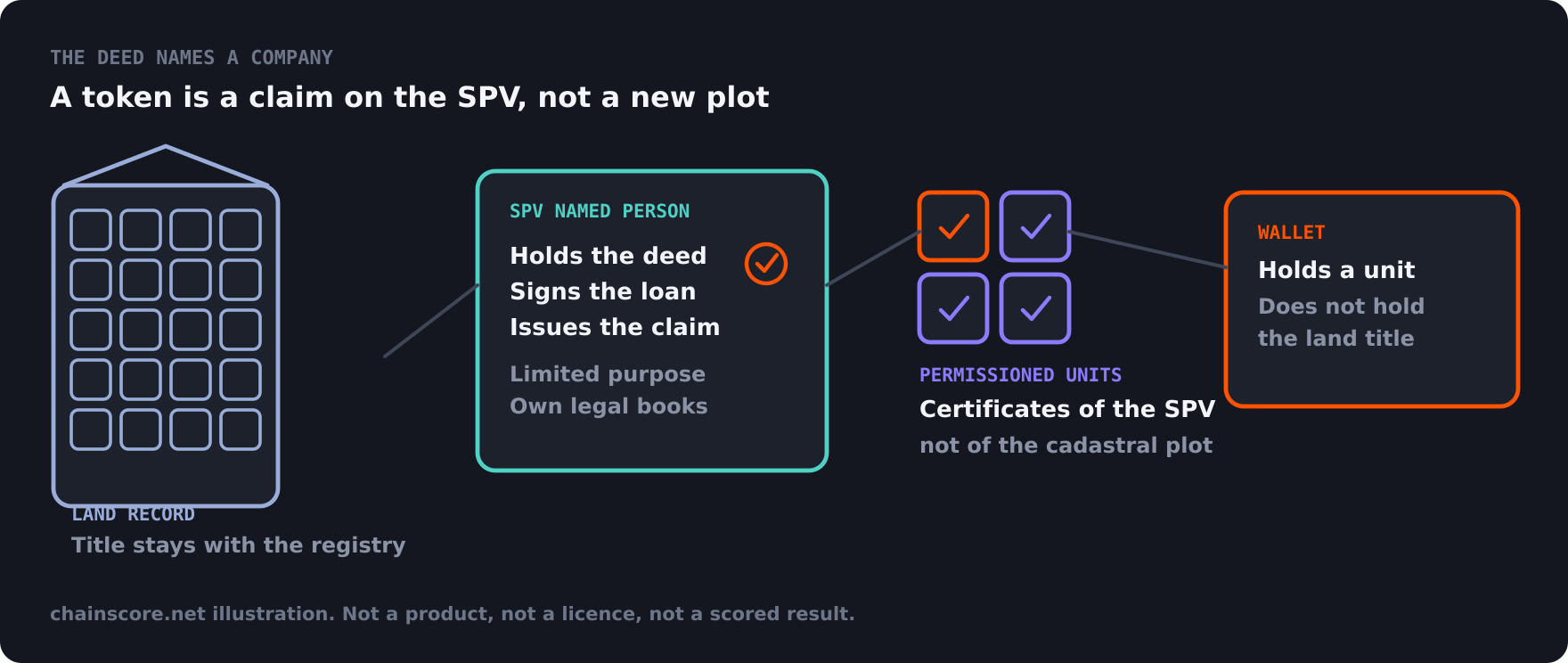
A special-purpose vehicle is a legal person formed for a limited job. In real estate that job is usually to hold one plot, or one silo of plots, and to issue claims on that holding. The sponsor’s other books stay on the other side of the door. Creditors of the plot look to this person. Creditors of the sponsor look elsewhere. That isolation is why commercial mortgage lending already asked for a single-purpose borrower long before anyone issued a token.
Tokenization does not invent the SPV. It usually means that person now issues a programmable certificate of the same claim. The land register still names the company. The wallet holds a unit of the company. Collapsing those two records is how a marketing page turns a token into a fake deed.
chainscore.net does not form that person, does not hold title, and does not issue the claim. A screen of wallet history is a different question from whether the vehicle was well formed.
The vehicle that holds the deed
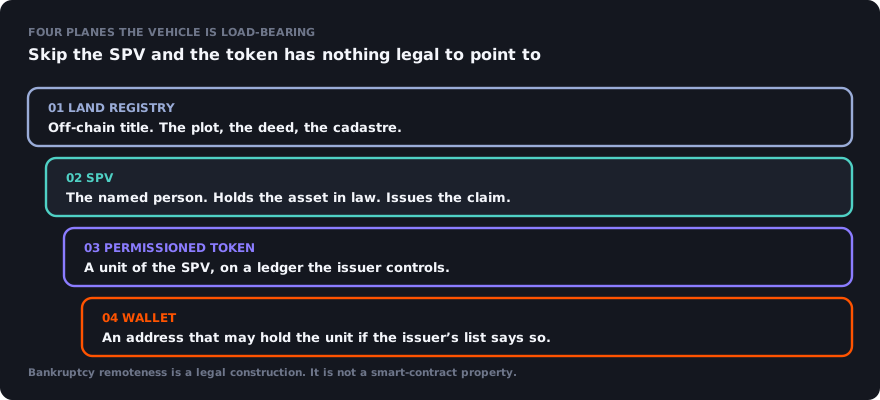
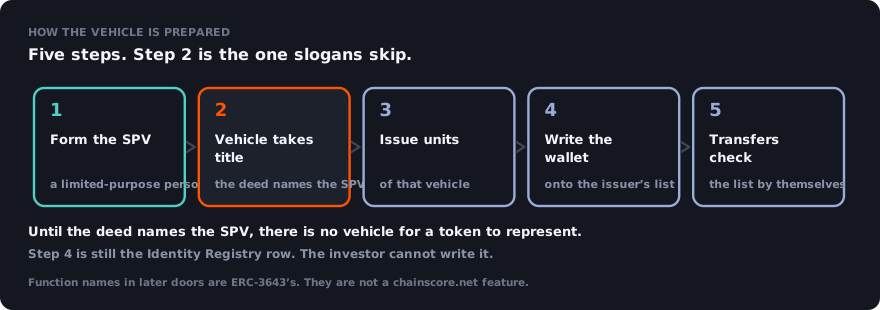
BIS Working Paper 1311 draws the walk that the U.S. platforms it measured actually used. For each property, the platform establishes a special-purpose vehicle that purchases and owns the property and thus holds the property deed. Those SPVs are legally independent entities. The properties they own are subsequently tokenised. The views in that paper are the author’s, not a BIS licence, and chainscore.net is not a data source for it.
Keep four altitudes in view. The land registry is off-chain. The SPV is the named person. The token is a unit of that person, on a ledger the issuer controls. The wallet is an address that may hold the unit if the issuer’s list says so. Skip the SPV and the token has nothing legal to point to.
Bankruptcy remoteness is a legal construction: limited purpose, separateness covenants, sometimes an independent manager. It is not a property of a smart contract. A token that cannot be transferred to a stranger does not, by itself, keep the plot out of the sponsor’s estate.
Two companies people treat as one
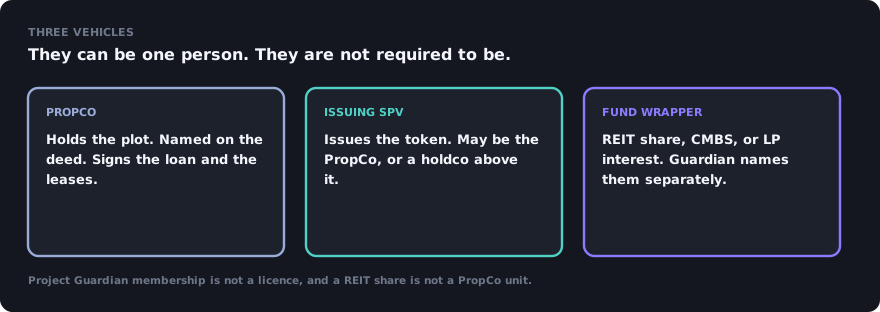
The PropCo holds title. It is named on the deed, signs the loan, and takes the rent. The issuing vehicle issues the token. They may be the same person. They often are not. A holdco can issue units that look through to one or more PropCos. Tokenizing the holdco and tokenizing each PropCo are different books.
The Guardian Funds Framework names the wrappers separately. Real-estate investment trust shares, commercial mortgage-backed securities, and private funds with limited partner agreements are three different claims. Tokenising a REIT share is not the same walk as an SPV that holds a single plot. Project Guardian membership is not a licence, and chainscore.net is not a participant.
The Commission’s 2011 adopting release on issuer review of assets in ABS offerings describes the issuing entity as designed to be a passive entity whose activities are limited to holding the pool, issuing the securities, and incidental work. Item 1101(c) of Regulation AB asks, in relevant part, for a security serviced by the cash flows of a discrete pool of receivables or other financial assets. A membership interest in a company that owns a building is often a different instrument. Looking through an SPV to a building’s rent does not by itself make the token an asset-backed security.
What the token is a claim on
The BIS paper applies SEC v. W.J. Howey Co. to the tokens it measured: investors pay money; the token represents a share in the SPV that owns the asset (the common enterprise); they expect rent or appreciation; and those returns depend on the managerial efforts of the platform, the property managers and other third parties. chainscore.net does not decide Howey.
The same paper reports that those platforms typically offered through unregistered exemptions such as Regulation D 506(c) for U.S. accredited investors and Regulation S for non-U.S. investors. That is a description of the platforms Blocksquare, LoftyAI and RealT as they appear in the paper’s map. It is not a chainscore.net offering, and it is not a finding that every property token uses those exemptions.
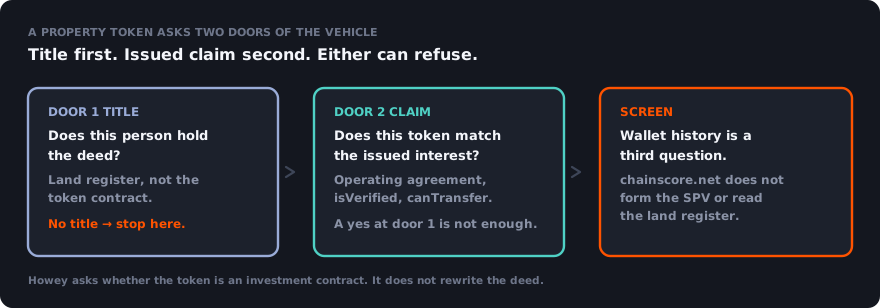
The technical standard the paper names for those platforms is ERC-20. A permissioned real-estate security token is a different book. EIP-3643 is the permissioned walk already on this site: the Identity Registry, registerIdentity, isVerified, canTransfer. Title is still a land-register question. The claim is an operating-agreement question. A screen of wallet history is a third question.
Rent still arrives at the SPV
Income does not appear because a token exists. Rent is collected by a manager, a servicer, or the vehicle itself, into the SPV’s own accounts. Operating costs, debt, tax and reserves are deducted on those books. What is left is a number on the vehicle, not a mint event.
The BIS paper describes residual rent on the platforms it measured as distributed through a smart contract linked to the property. That is a programme choice. Many vehicles still wire residual fiat to each holder’s bank. The security token names who may be paid. It does not, by itself, move the cash.
None of that is a yield chainscore.net publishes, and none of it is inferred from a directory row. The directory’s Tokenization & DLT bucket quotes origination and servicing houses. It does not map a wallet to a flat, and it does not map a token to an SPV file.
What a screen can and cannot see
The chainscore.net directory holds 28 entities across 51 service rows. The Tokenization & DLT bucket inside it is 11 houses and 11 service rows — quoted from the CSV, not scored. Those rows name origination and servicing books. They do not name the SPV that holds a given plot.
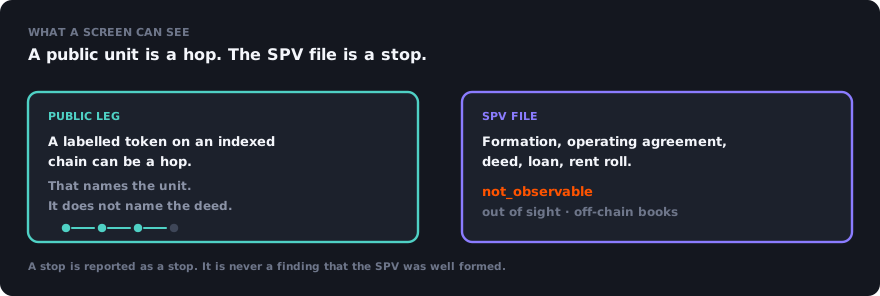
Where a unit lives on a public, indexed chain, ChainTrace can follow the hops. The certificate of formation, the operating agreement, the deed and the rent roll still are not. That file is not_observable — out of sight, off-chain books. A stop is reported as a stop. It is not a finding that the SPV was well formed, and it is not an ERC-3643 eligibility check. A screen of the public hops is not a formation check. It is not KYC. It means a label is documented in the label book.
PAWS Liquid LLC is the listed reviewer for real-estate and tokenisation support on the Position rail. It does not run a bank, does not form the SPV, and does not issue the token. chainscore.net introduces a house that publishes a tokenisation or lending row; it does not underwrite, does not certify those firms, and does not process eligibility. An unlabelled house stays unknown.