For a credit desk
One procedure binds the screen, the coverage gate and a seal you can cite. Face-sheet, wallet and annex hashes sit on a single artefact.
Read the article chainscore.net
AML
Journal
How a credit desk, a broker-dealer, a CASP, an exchange, an allocator, a company, an auditor and a regulator take a screen into their own file.
One procedure binds the screen, the coverage gate and a seal you can cite. Face-sheet, wallet and annex hashes sit on a single artefact.
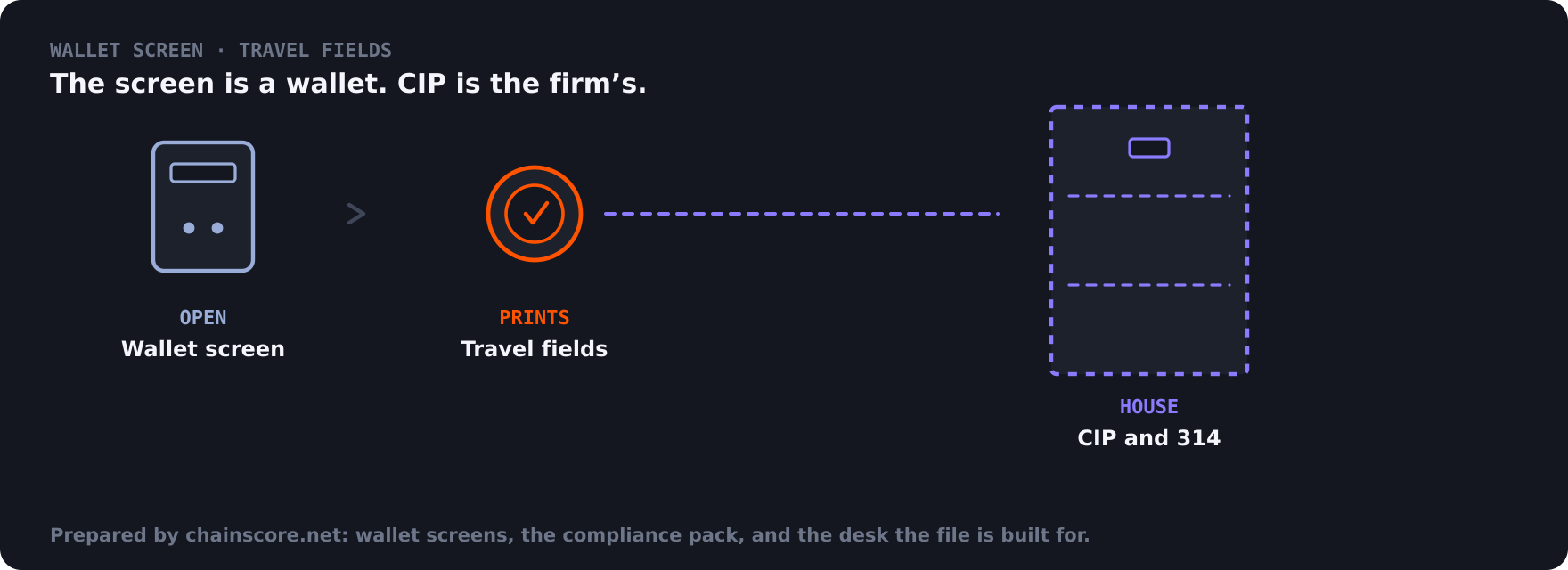
Read the articleThe print carries a wallet screen plus the Travel Rule fields the firm typed — ready for CIP, IVMS-101 and the 314 program.
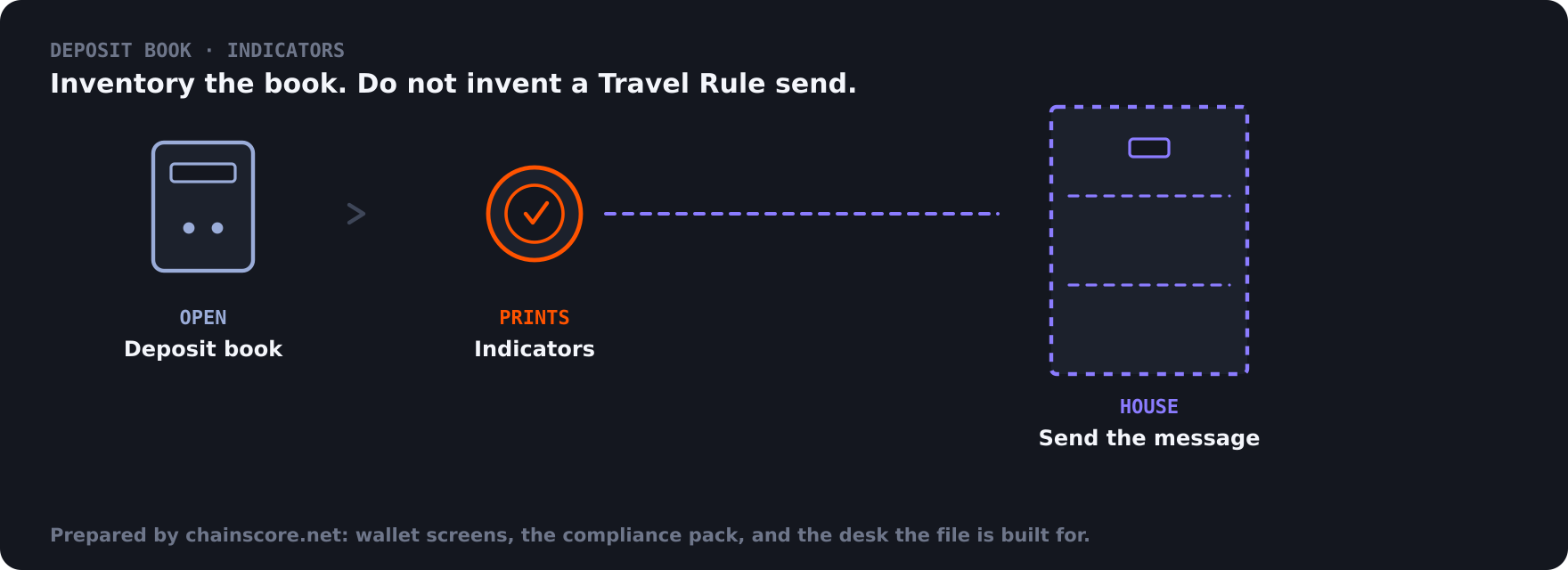
Read the articleHolistix inventories the deposit book. Overlay hits stay on the wallet they belong to, so ops can route the send they can name.
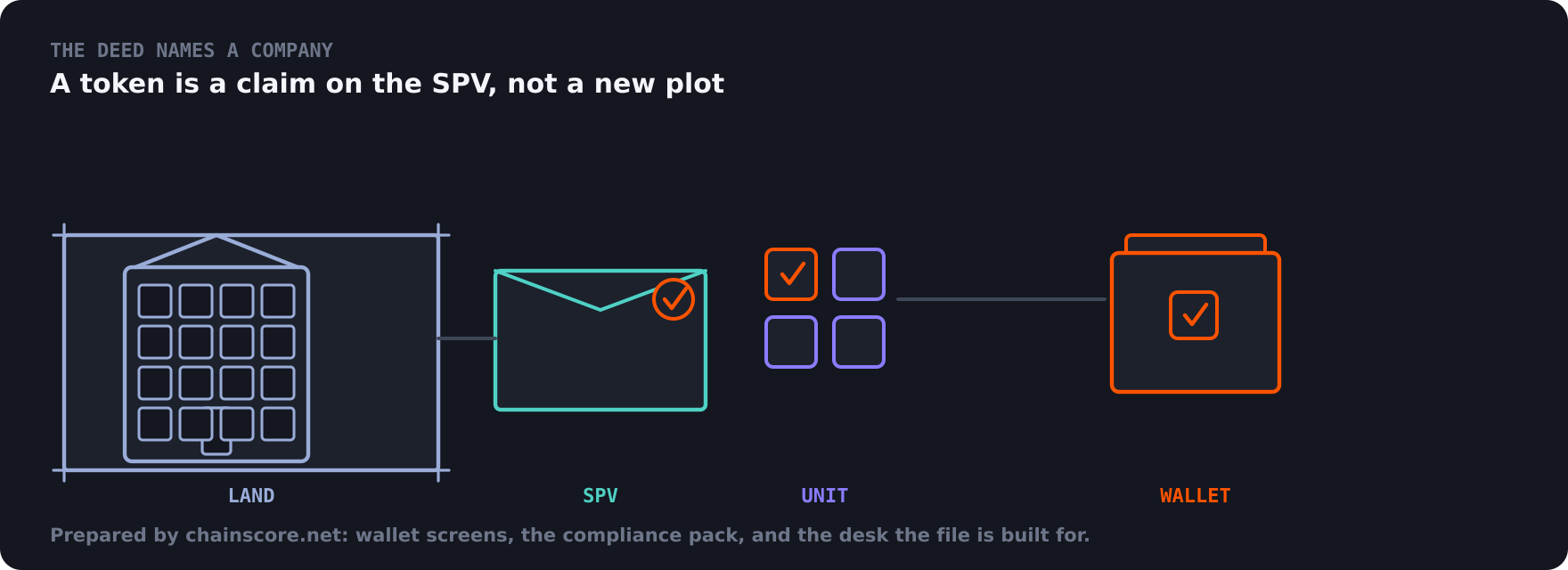
Read the articleThe special-purpose vehicle is the named person that holds the deed. The token is a claim on that person, so a reader can keep the plot, the company and the wallet apart.
Read the articleThree isolated scores and one coverage gate. Map each engine to the freeze or release control that uses it.
Read the articleIdentified, priced positions can be inventoried on the addresses the fund uses. Unread and unpriced chains are named.
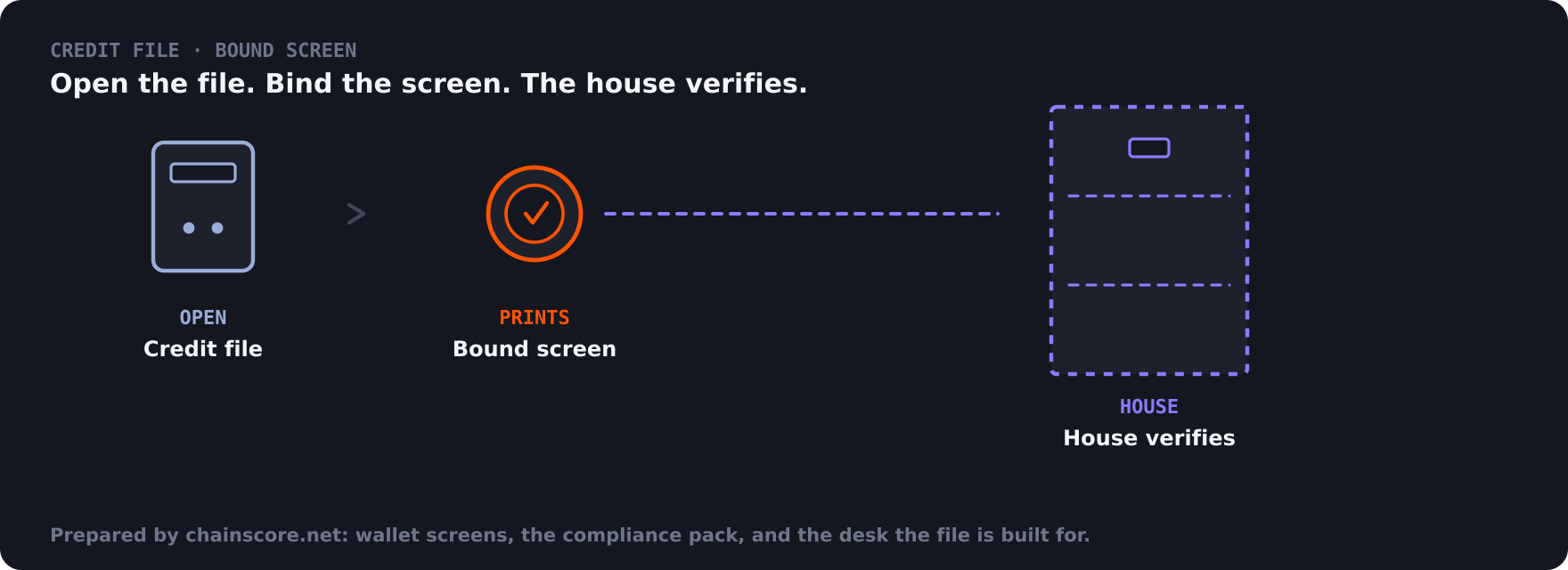
Read the articleScreen the treasury, then take a procedure PDF to a house: legal name, LEI, directors and the bound screens on one pack.
Read the articleCite the sealed copy and the overlay that actually ran. SHA-256 lets you prove this print; a rerun is a new measurement.
Read the articleThe print names the list that ran and whether the match is an address. Unscreened chains stay unnamed as compared.
Read the articleStaff views, the GENIUS Act, the Circle Reserve Fund, and where a wallet screen names the cash token on its own book.
Read the articleA token is a claim on a vehicle. The walk from land title to a permissioned transfer, and where a public-chain screen still follows a hop.
Read the articleFive plain-language steps from an ONCHAINID to a transfer, and why putting the wallet on the issuer’s list is the one people skip.
Read the articleWhat the Bank of England and the FCA actually authorise, how the limits contain it, and how to read the published dashboard beside the directory.
Read the articleHow permissioned tokens decide who may hold them, how a wallet screen sits beside that check, and where the directory’s tokenization bucket still helps.
Read the article