 chainscore.net
Desk
For an auditor
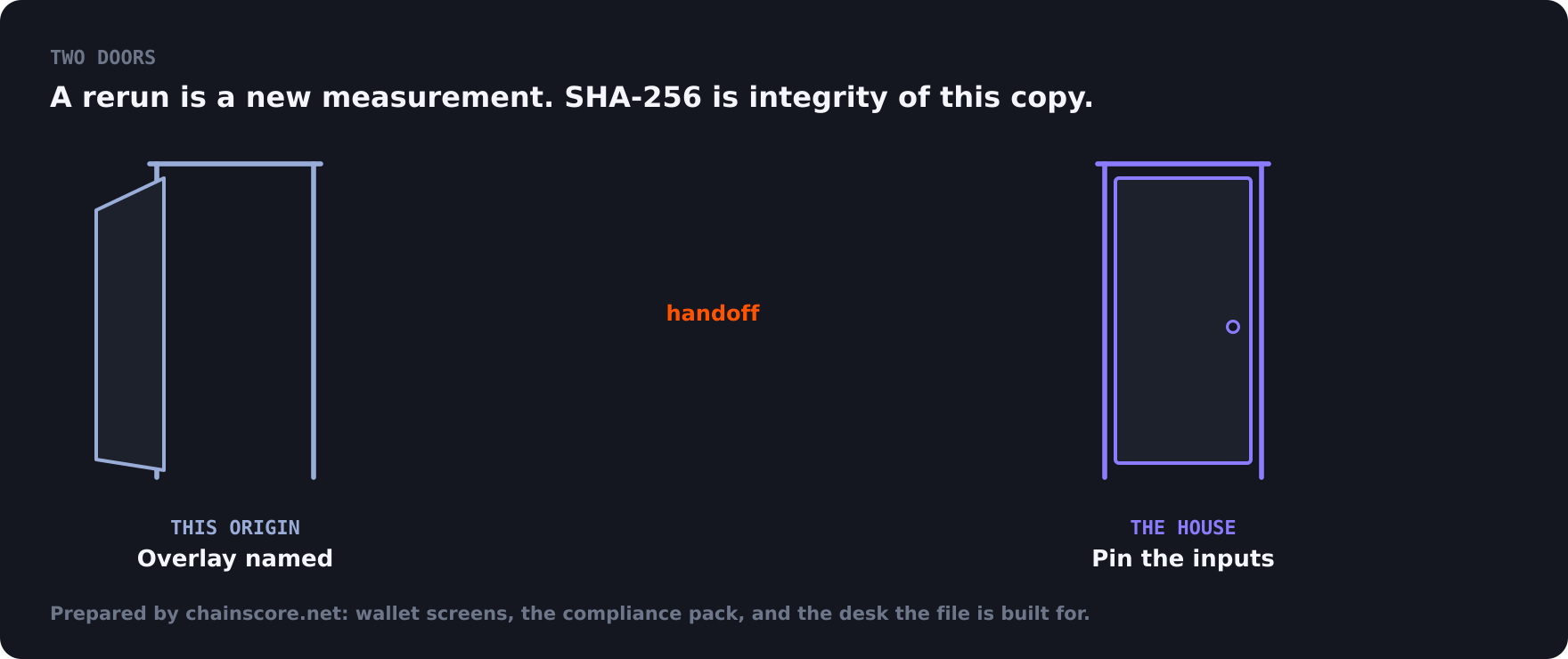
An auditor gets a sealed copy, a named overlay and a coverage gate they can sample. Cite the print that actually ran. A rerun is a new measurement you can set beside it.
What you can sample
The sealed PDF, the engine, the report id and the overlay publish date let you cite the copy they filed. A rerun is a new measurement you can set beside it.
generated_at is now. Prices, labels and the sanctions snapshot all move. The SHA-256 seal is integrity of this copy, so an audit sample can pin the dollars it relied on. Keep the PDF you sampled.
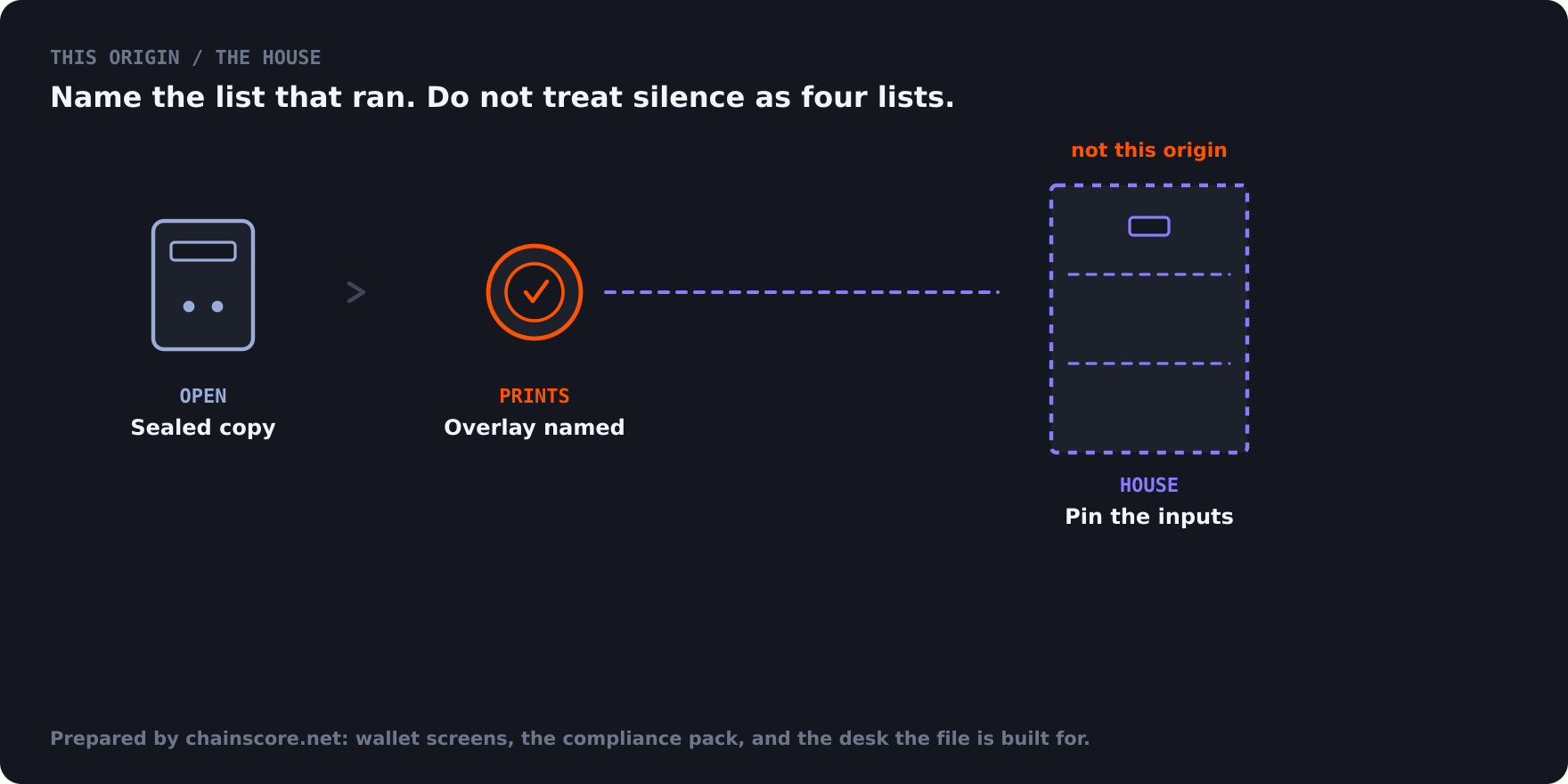
Ask which overlay ran. ScoreGuard prints a CIP-style log line: this screen against OFAC SDN at a published date. A no-match page that names only the lists that loaded is usable. A page that names lists that did not load is visible as a miss.
How to read coverage
Value coverage and count coverage both print. The gate holds a thin screen in review. If the Assessment disagrees with the gate, the artefact shows both — quote both.
ScoreGuard runs 1–100, lower is riskier. ChainTrace runs 0–100, higher is riskier. Holistix runs 0.0–10.0, higher is riskier. Sampling across engines is three measurements, so each book can be tested on its own scale.
What the sample gives you at the house
CIP of the customer, 314(a), a signed-message proof that the fund controls the key, and the house’s retention of the PDF are the house tests. Named handoffs and not-established blocks are the honest absences you can sample. A match is never invented, so a quiet page is a thin screen you can write up.
Designated addresses on chains this origin walks are in coverage when those chains are screened. Count unscreened chains as unnamed as compared — a named miss you can put in the sample.