 chainscore.net
Desk
For CASP operations
Operations at a crypto-asset service provider get a book of deposit wallets, overlay hits on the wallet they belong to, and a named Travel Rule gap — so the send can leave from the stack that talks to the other VASP.
Inventory first
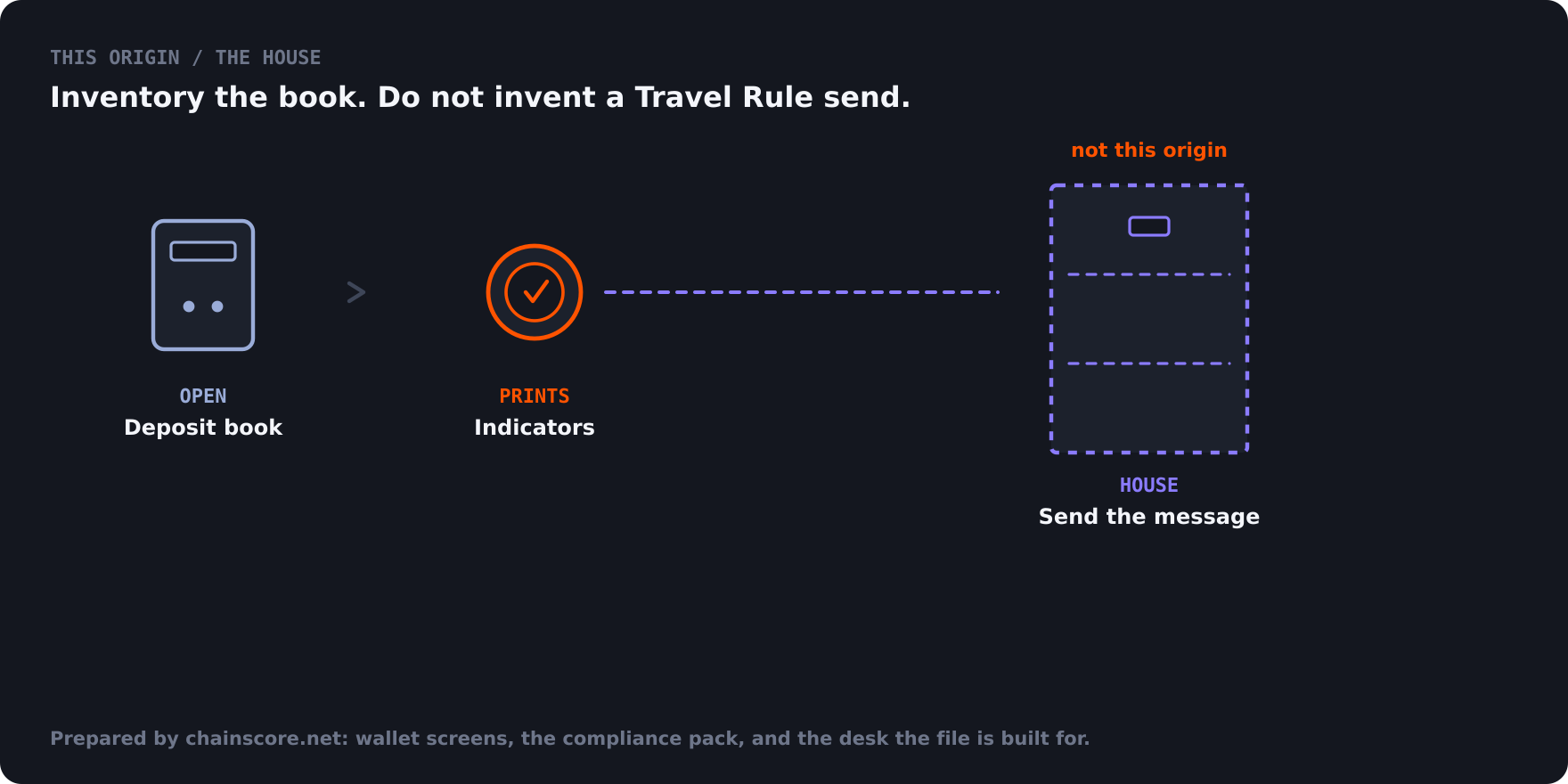
After you sign in, Screen is the path that files it. Use Holistix on the deposit book, then ScoreGuard or ChainTrace on the deposit or withdrawal address. If the house needs one artefact, bind the report to the procedure and download the sealed PDF. Read the coverage gate before the headline band.
Holistix will sum identified, priced positions across a book and name unread or unpriced chains. Overlay hits stay on the wallet they belong to, so a hit is actionable on that deposit, not averaged away.
UN, EU, UK and OFAC names can sit on one CIP log as loaded overlays. UN Security Council names have no structured crypto-address field; the address compare is the chain this origin walks. A missing overlay is named as absent, so ops can see which lists actually ran.
A Travel Rule send you can name
Stated originator and beneficiary print when the institution supplied them. TRAVEL_RULE_GAP names a VASP that cannot take the message, so ops know which route still needs a send from the counterparty stack.
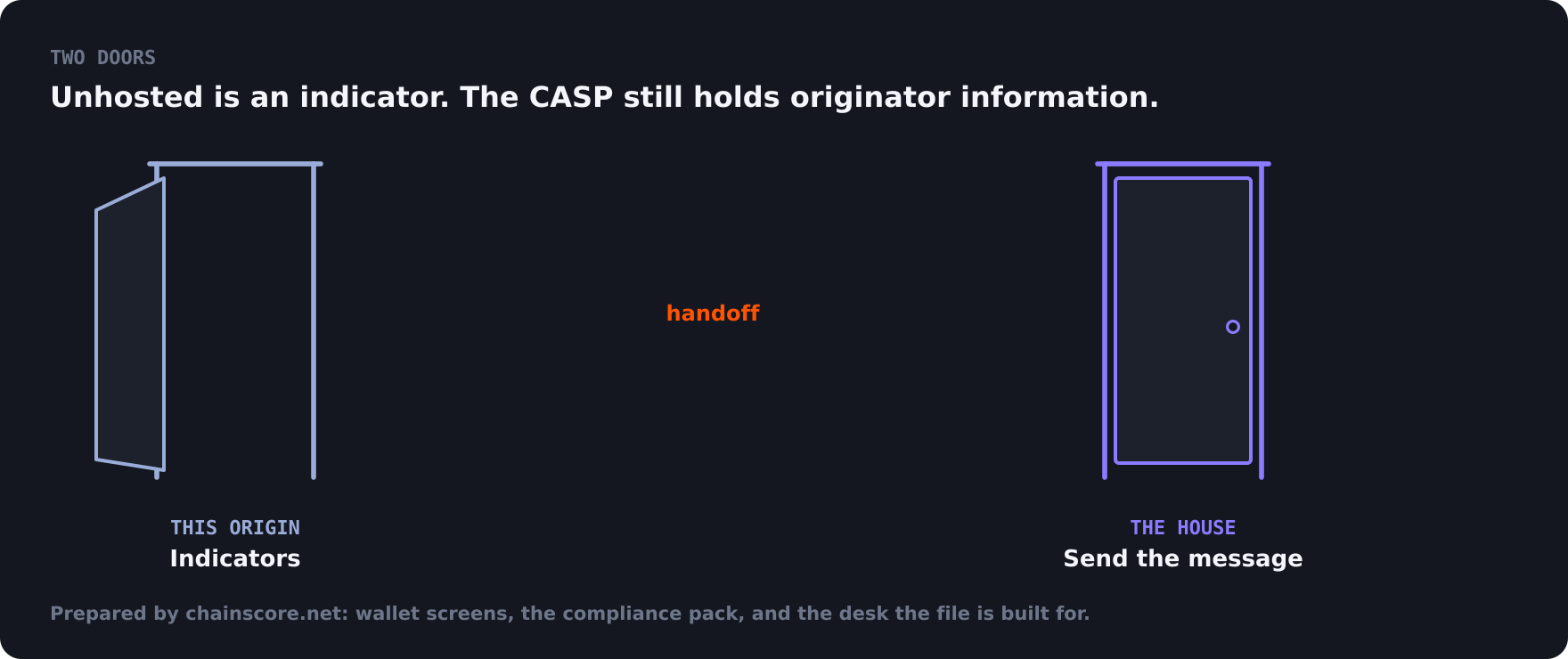
UNHOSTED_WALLET_MAJORITY and the host field say when no obliged entity sits on the other side. That is the cue to hold originator information on the CASP’s own file for that transfer.
What ops take to the send
Use ScoreGuard or ChainTrace on the deposit or withdrawal address. Read coverage before the band. Then send the Travel Rule message from the stack that actually talks to the other VASP, with the stated fields already on the print.
Directory listing of another CASP is coverage you can open. A Know Your VASP print is a register extract on an exact match, so a live licence line is something you can quote.