 chainscore.net
Desk
For an exchange
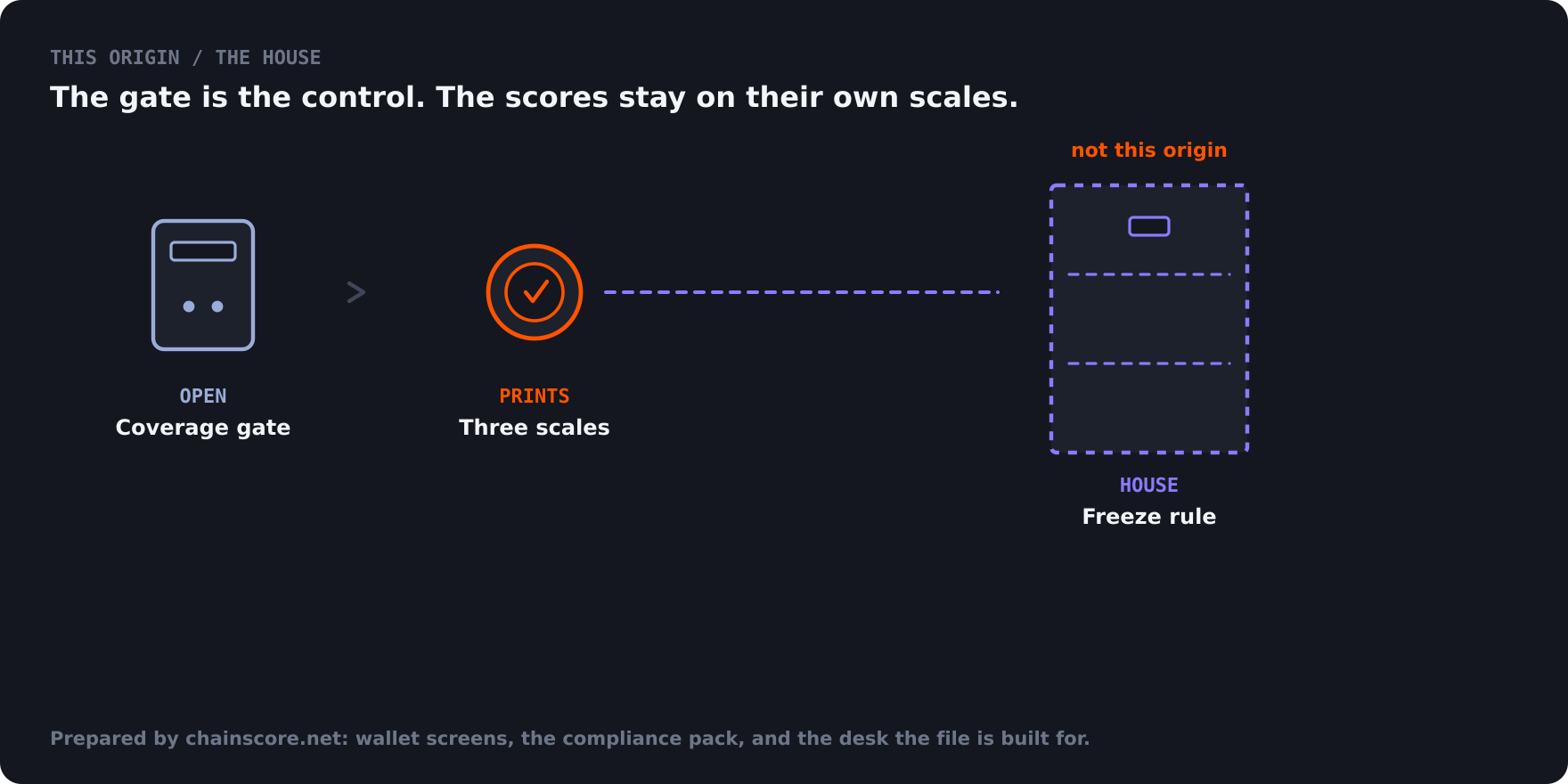
An exchange gets three isolated scores and a coverage gate. The gate is the freeze-or-release control: value coverage and count coverage both print, so a thin screen stays in review.
One gate, three books
ScoreGuard runs 1–100, lower is riskier. ChainTrace runs 0–100, higher is riskier. Holistix runs 0.0–10.0, higher is riskier. Map each engine to the control that uses it. Isolated scales let a freeze rule cite one book at a time.
Value coverage and count coverage both print. A thin screen stays in review. That is the examiner control that actually works on a deposit.
How to take an action
After you sign in, Screen is the path that files it. Map each engine to the control that uses it. The coverage gate plus a direct designation plus the house file is the freeze-or-release rule — one control per book. If the house needs one artefact, bind the report to the procedure and download the sealed PDF. Read the coverage gate before the headline band.
Direct designation (OFAC overlay on a screened chain) overrides a curated exchange label. Missing snapshot degrades to “not active” rather than a clean score, so the desk sees the gap. Forty-eight designated addresses sit on chains this origin walks only when those chains are in coverage — unscreened chains stay unnamed as compared.
Travel Rule is stated fields on the print, ready for the exchange’s own VASP message. Send from your Travel Rule stack with originator and beneficiary already named.
What the desk keeps
The freeze/release rule is yours, with a coverage gate, a direct designation and the house file to cite. A quiet Holistix page stays a thin screen, not a release.
A SAR or STR packet can recommend review. The institution decides to file, with the packet already assembled from the print.