 chainscore.net
Desk
For a regulator
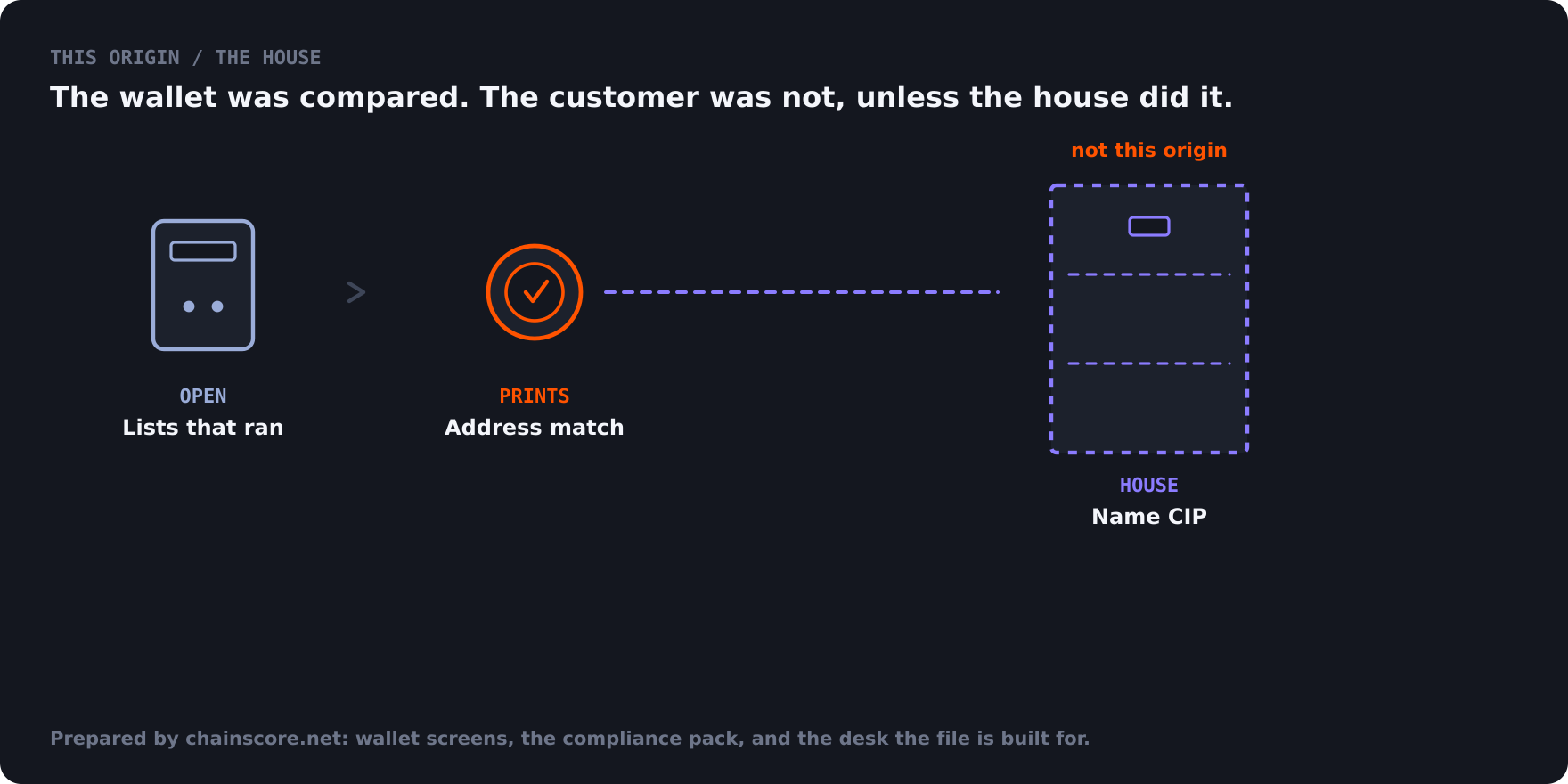
A supervisor reading this print can see which list ran, whether the match is an address or a name, and what was never compared. North star: a named overlay and a named miss are usable in a file.
Address, and the list that ran
The sealed PDF, the engine, the report id and the overlay publish date let you cite the copy they filed. A rerun is a new measurement you can set beside it.
The live overlay is designated addresses on chains this origin walks. ScoreGuard can timestamp that compare. Originator and beneficiary names on a Travel Rule payload sit beside that address screen, so the house file can show which compare it ran.
A no-match page names the overlay that actually loaded. A missing overlay is named as absent. Quiet is a named screen, not four lists inferred.
What the artefact will show
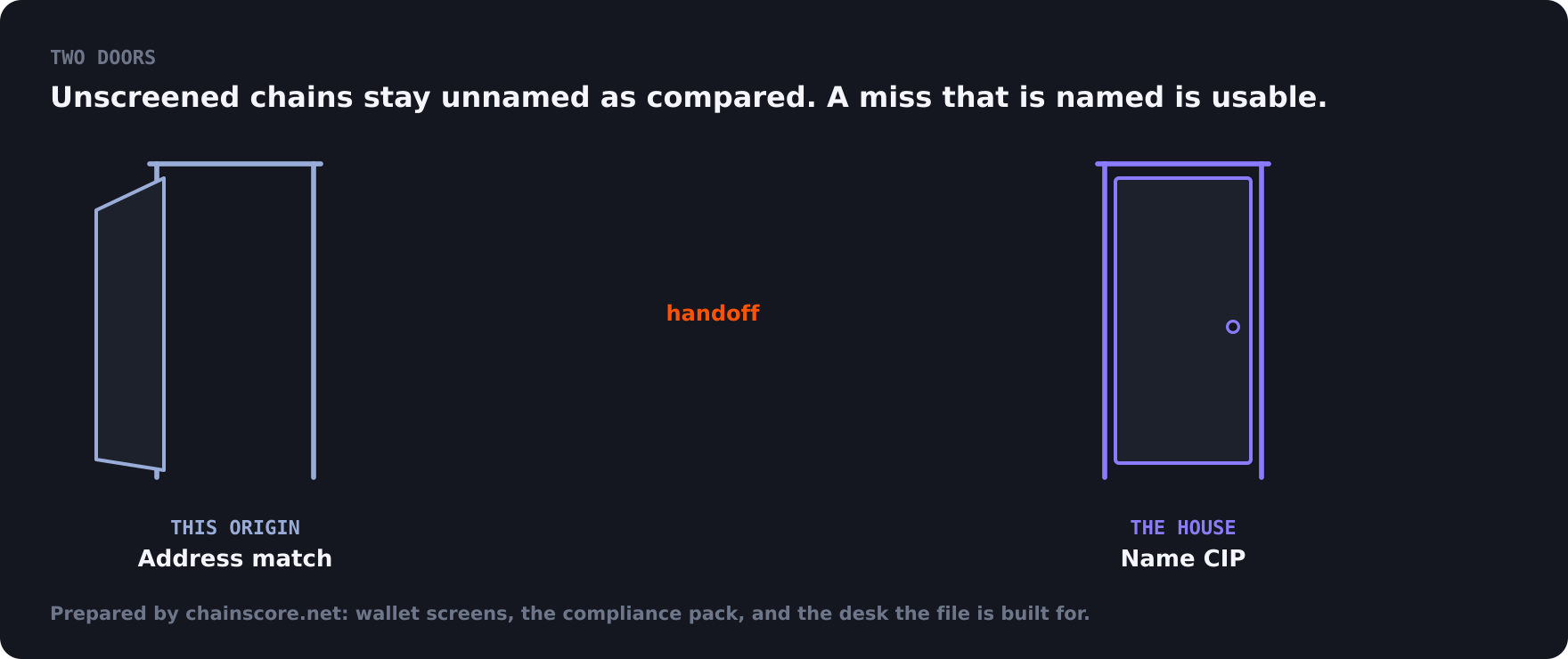
Designated addresses on unscreened chains are dropped from the label books. The honest line is: unnamed as compared — a miss a supervisor can see.
Coverage gate and the weaker-side rule hold a thin attribution in review. Filing recommendations are calendar facts and a packet the house can take to its own filing stack.
How to use the print in a file
Cite engine, report id, overlay publish date, coverage, and the seal. Ask the house for CIP of the customer, for 314(a) if they are a US broker-dealer, and for the Travel Rule send if they are a CASP. The print is the wallet half of that file.
Directory listing is coverage you can open. chainscore.net names a CASP on an exact register match, so a supervisor can see which extract the house quoted.